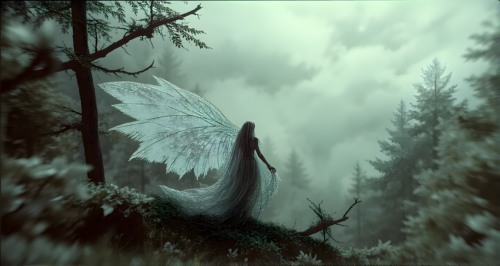
Explore West Virginia legends like the Flatwoods Monster and John Henry, then write and tell your own mountain legend.
Full Course Description
On September 12, 1952, a fireball streaked across the sky over Flatwoods, West Virginia, and landed on a hill. Seven people climbed up to see what it was. What they found has been talked about ever since. Legends of the Hills: Writing Your Own Mountain Folktale invites young writers into one of Appalachia’s richest traditions: the told story. Students explore real West Virginia legends, from the Flatwoods Monster of Braxton County to John Henry, the steel-driving man of the Big Bend Tunnel, and discover what makes a legend feel true: a real place, witnesses, vivid details, evidence left behind, and a question nobody can answer. Then students write their own. They choose a real place, perhaps an old bridge, a hollow with an odd name, or an abandoned schoolhouse, and invent a creature, a spirit, a strange event, or a tall tale hero to haunt it. Along the way, they learn the storyteller’s craft: the frame, the pause, the rhythm of repetition, and how to write in a true mountain voice without falling into stereotype. The course ends the way legends always have: with students telling their story out loud.
What’s Included
- Five video lessons
- A downloadable student workbook with five handouts, an original model legend and tall tale, and a self-assessment rubric
- A resource guide with direct links to every free reading
- Parent and educator notes with content information and grading guidance
Students Will Learn To
- Identify the elements of legends, tall tales, ghost stories, and folktales
- Separate documented history from legend
- Build a story around a real place
- Create a memorable creature, spirit, or hero with its own “rules”
- Write in a storyteller’s voice using framing, repetition, and pacing
- Use mountain dialect respectfully, without stereotype
- Revise for the ear and tell a story aloud
Course Outline
- Lesson 1: What Makes a Legend? Kinds of mountain stories, the Flatwoods Monster, and the five elements of a legend.
- Lesson 2: The Kernel of Truth. John Henry, Legends & Lore roadside markers, finding your place, and interviewing an elder.
- Lesson 3: Building Your Legend. Choosing a type, designing the mystery, and planning the story.
- Lesson 4: The Teller’s Voice. Framing, talking to the listener, rhythm, mountain voice with respect, and drafting.
- Lesson 5: Telling It True(ish). Revision, the respect check, and telling the legend aloud.
Details
- Grades: 8 & Up (adult writers welcome)
- Format: Online, self-paced, no live sessions
- Time: About 10–12 hours; most students finish in 2–3 weeks
- Capstone: An original legend (600–1,200 words), told aloud, plus reflection
- Hope Scholarship: This course is available through the West Virginia Hope Scholarship marketplace.
A Note for Families
Legends in this course stay at a “campfire” level: eerie and fun, never graphic. We study legends as stories and heritage, not as belief.
About the Instructor
Lisa Hayes-Minney is a writer, editor, and teacher from central West Virginia. She holds an MFA in Creative Writing, teaches as a private writing coach, and was named the 2022 West Virginia Librarian of the Year. Her creative nonfiction has appeared in literary journals and a WVU Press anthology.
Curriculum
- 5 Sections
- 5 Lessons
- Lifetime
- Lesson 1: What Makes a Legend?1 ItemKinds of mountain stories, and the five elements of a legend.
- Lesson 2: The Kernel of Truth1 ItemLegends and Lore roadside markers, finding your place, interviewing an elder.
- Lesson 3: Building Your Legend1 ItemChoosing a type, designing the mystery, planning the story.
- Lesson 4: The Teller's Voice1 ItemFraming, talking to the listener, rhythm, mountain voice with respect, and drafting.
- Lesson 5: Telling it True(ish)1 ItemRevision, the respect check, and telling the legend aloud
Instructor
MFA in Creative Writing, BA in Written English with a minor in journalism; years of writing and education experience; multiple published works.